SPIKE'S PEAK READINESS FRAMEWORK FOR RETAIL TECH
You can't do everything before peak. We'll help you prioritise.
Peak puts every part of retail technology under pressure at once. Traffic spikes, systems strain, and the gap between "we planned for this" and "we're fighting fires" comes down to what you prioritised in the months before it hit.
Every retail tech leader knows when their peaks are coming, whether that's Black Friday, Singles Day, Diwali, Valentine's Day, or whatever drives the biggest spike in your calendar.
Knowing the date is the easy part. Fewer know whether their teams are actually ready for it, or which risks deserve attention first.
That's the problem with most peak readiness advice: it treats everything as equally urgent. In reality, some things will break your trading day if you get them wrong, some will cause a headache, and some are worth doing but won't sink you if they slip.
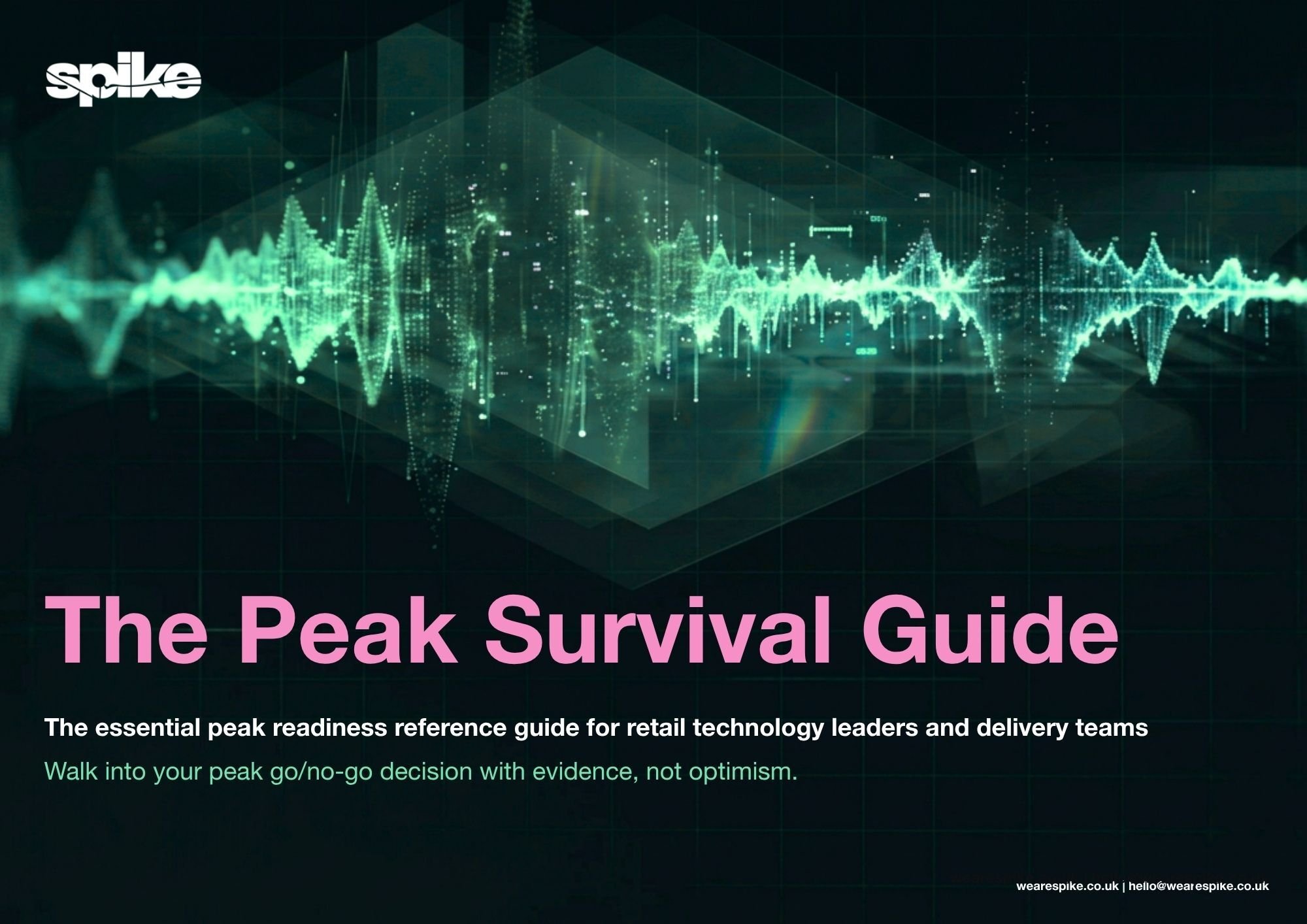
The Peak Survival Guide gives retail technology leaders and delivery teams a shared way to prioritise: what you must get right, what you should get right, and what you could get right if time allows.
Get your free guide
A practical reference for retail technology leaders and delivery teams preparing for peak trading. It's a free download.
It'll be delivered to your inbox.
Five risk areas. One clear view of where readiness breaks down.
| Risk area | What it is |
|---|---|
|
Capacity
|
Load and capacity readiness at genuine peak scale |
|
Operational
|
People and process readiness for the unpredictable |
|
Visibility
|
Observability, not just dashboards, but rehearsed response
|
|
Live-Site
|
Production testing and live-site monitoring
|
|
Third-Party
|
Third-party and SaaS dependency risk
|
Peak readiness looks different depending on where you sit.
For tech leaders, it's about risk exposure, board-level confidence, and whether the business is protected if something goes wrong at the worst possible moment.
For delivery teams, it's about what needs to be tested, fixed, or hardened this sprint, and how to get it done with the time and resource actually available.
The Peak Survival Guide is built for both. It uses a simple Must, Should, Could structure to cut through the noise, so the people setting priorities and the people executing on them are working from the same plan.
Learn more about this project
Receive a two-page version of this case study, featuring more detail on what's made the project a success.
A practical reference both sides of the table will actually use
- A clear view of the five risk areas that matter most in the run-up to peak
- What's a Must, what's a Should, and what's a Could - and how to tell the difference under pressure
- Activities written as clear actions your team can pick up and run with, not abstract theory
- A way for tech leaders and delivery teams to check they're looking at the same risks, from both sides
- A roadmap sequence for pulling it all together into a plan you can actually execute against
The Peak Survival Guide FAQs
The most asked questions about our Peak Survival Guide.
-
What is Spike's Peak Survival Guide?
The Peak Survival Guide is Spike's framework for peak trading readiness in retail technology.
It breaks peak preparation down into five risk areas and prioritises the work against each using a Must, Should, Could structure, so tech leaders and delivery teams both know where to spend limited time before freeze.
-
Who is The Peak Survival Guide for?
Retail technology leaders and delivery teams preparing for peak trading periods i.e. anyone who needs to prioritise readiness work with limited time before peak hits.
-
How is this different from other peak readiness guides?
Most peak readiness advice treats every risk as equally urgent.
The Peak Survival Guide is built around Must, Should, Could prioritisation across five specific risk areas (Capacity, Operational, Visibility, Live-Site, Third-Party), so teams can focus on what actually protects trading, not a generic checklist.
-
Why use Must, Should, Could instead of a maturity model?
Peak doesn't wait for a phased rollout.
Must, Should, Could gives teams a way to prioritise everything that needs doing in the time available, rather than assuming there's time to work through stages in order.
-
Do I need to be technical to use this guide?
No. It's written to work for both technology leaders making prioritisation calls and delivery teams doing the hands-on work, so both sides are looking at the same plan.
-
What's actually in the guide?
A breakdown of the five risk areas that matter most for peak trading, a Must/Should/Could framework for prioritising work against them, and practical activities your team can run before peak hits. The guide is 27 pages long.